
Every generation of shooters has a prejudice it has to unlearn. Right now, ours is about where a gun was made. A generation ago, it was about what a gun was made of. It's worth walking through both, because it's the same story told twice, and it tells you where the second one is headed.
When Gaston Glock introduced the first striker-fired polymer service pistol, the reaction wasn't excitement. It was suspicion. A plastic gun? The Austrian military's own 1982 trials pitted it against established names like Beretta, SIG Sauer, FN Herstal, and Heckler & Koch, and the "toy-like" polymer pistol beat every one of them on endurance and abuse testing, earning an initial order of 25,000 to 30,000 units. Consumer and institutional perception shifted from skepticism to acceptance only once the results were undeniable.
What's less remembered is that FN was already experimenting with polymer at almost the same time. The Five-seven, developed alongside the P90 and introduced in 1998, used a polymer frame and even a polymer-shrouded slide over its steel internals, years before most of the industry treated the material as anything but a novelty. Polymer wasn't a Glock party trick. It was a material the whole industry was quietly circling.
Here's the part that gets forgotten: it took the biggest names in the business twenty to thirty years to fully commit to the striker-fired polymer format Glock had proven.
Every one of these brands spent decades defending the hammer-fired, metal-and-wood tradition before eventually building the exact thing they'd once dismissed. Nobody calls Beretta or Sig "unproven" for arriving late; the market simply absorbed the format once the results were in. The prejudice didn't get argued away. It got out-performed, one torture test at a time.
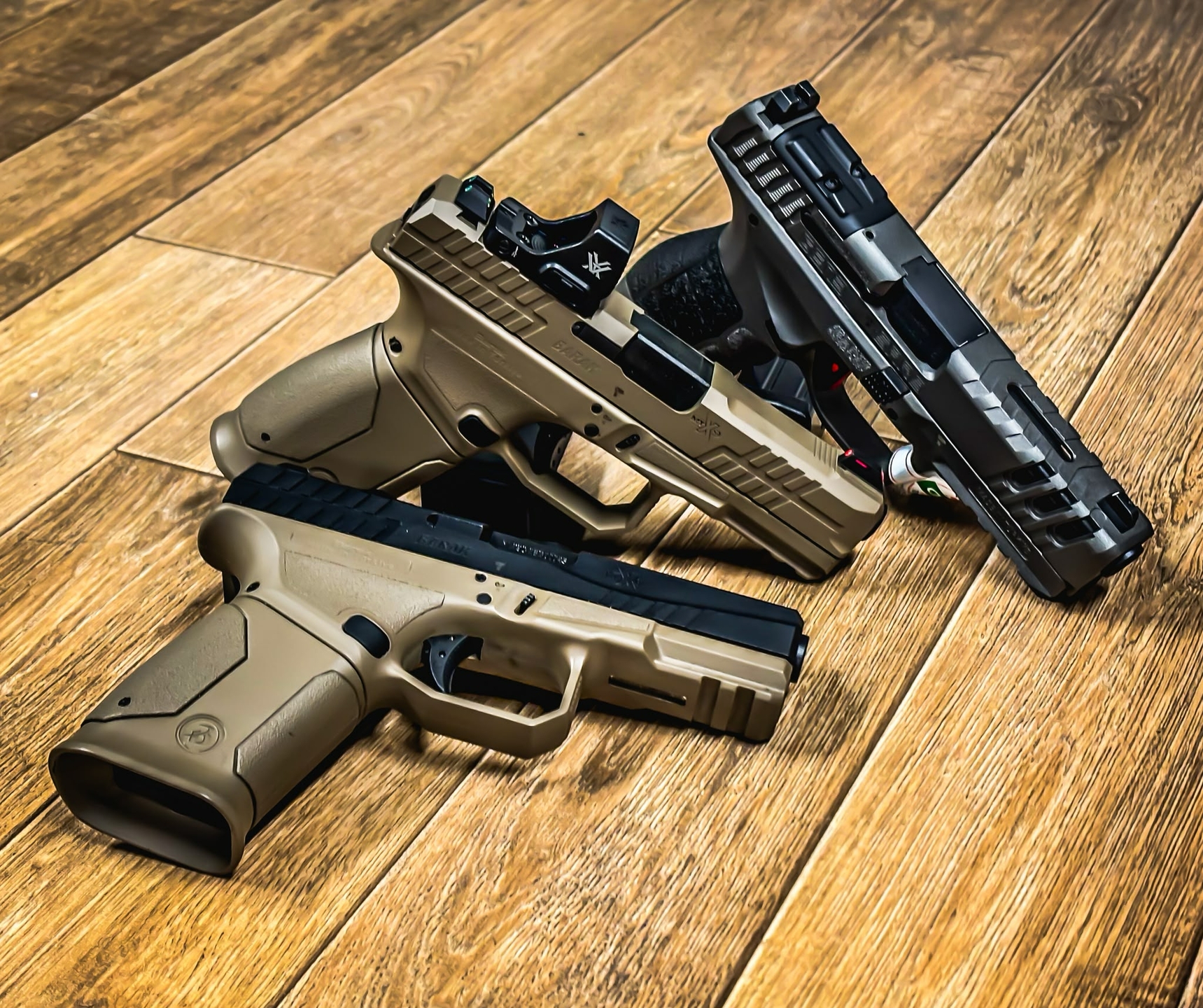
Country of origin is running the identical playbook right now, just with Turkey standing where "plastic" used to stand.
The open secret is that most of the brands people default to trusting have already made the same bet Glock made on polymer, quietly, and years ago:
When Beretta, Weatherby, CZ, and Winchester are comfortable putting their own name on a Turkish-built receiver, the "country of origin" objection has already been answered by the people with the most to lose if it went wrong.
Turkish arms-making isn't a recent export hustle riding on cheap labour. It traces back to the Ottoman Tophane arsenal, and Sarsilmaz, Turkey's largest small-arms manufacturer, has been forging continuously since 1880. What's changed recently is the scope. Turkish manufacturers no longer just build shotguns and entry pistols: state manufacturer MKE fields the JNG-90 bolt-action sniper rifle in 7.62×51mm and the MAM-15, a 12.7mm (.50 BMG) anti-materiel rifle in the same weight class as the world's premier long-range and anti-materiel systems. Akdal's magazine-fed MKA 1919 semi-auto combat shotgun, in production since 2007, was one of the platforms that pioneered the mag-fed format still being built on today. Pistols, shotguns, semi-automatic rifles, and now high-caliber precision systems all come out of the same industrial base. This is a full-spectrum arms industry, not a budget sideline.
That industrial base is coordinated top-down through the SSB (Secretariat of Defense Industries), with industrial licensing, export authorization, and end-user checks all run at the state level. In 2025, Turkish defense and aerospace exports hit $10.5 billion, up 48% year-on-year, with 56% of that going to the EU, NATO members, and the US. Turkey's own stated goal is a top-10 ranking among global defense exporters by 2028.
A government investing at that scale, chasing that kind of international credibility, has every reason to keep its manufacturers' reputation intact. A quality failure abroad doesn't just embarrass one factory; it undermines a national strategy with billions of euros riding on it. The state coordination that some read as a red flag is, in practice, the same kind of institutional pressure toward consistency that eventually made polymer respectable: a system with too much to lose to tolerate junk leaving the country.
We don't ask anyone to take the rest on faith. Every firearm we bring in is independently CIP-tested in Belgium before it reaches a dealer's counter. Not tested on paper by the manufacturer, tested here, by the same proof standard the rest of the European market already relies on.
That's the same instinct that turned Glock's "plastic gun" into the industry standard, and the same instinct that eventually brought Beretta, Sig, S&W, and FN into the polymer-striker market they once ignored: don't argue the prejudice away, out-test it. Turkey's manufacturers have already been doing that for two decades, quietly, under names you already trust. We're just being upfront about where it comes from, and adding one more layer of proof on our own soil.
Every claim above is drawn from a public source, listed below in the order it appears in the text.
No comments found.
